

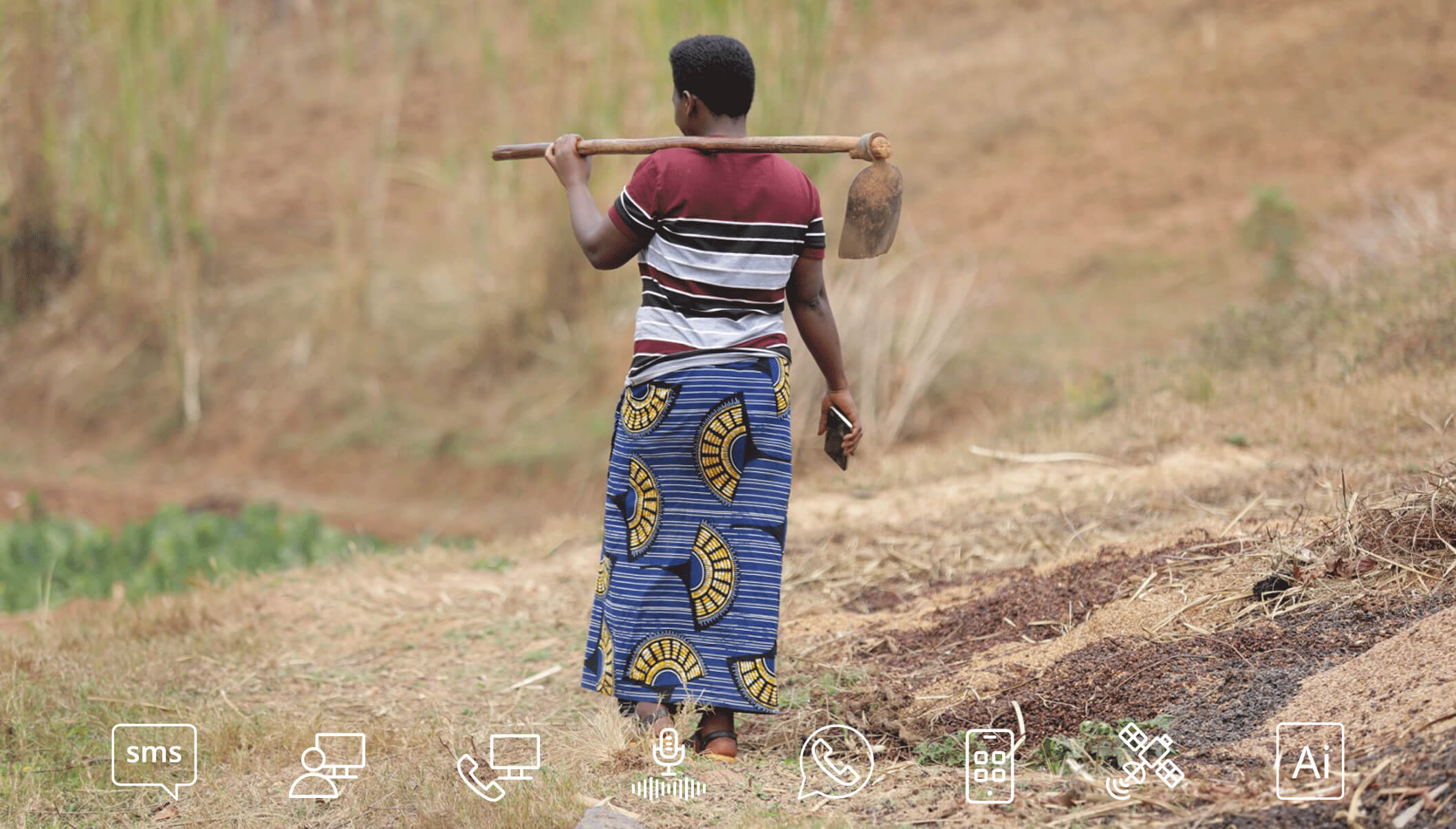
As digital technologies become increasingly common in agricultural development, a key question remains: how reliable is the information farmers provide through mobile applications?
The Agile Data Approaches and Innovations for Monitoring (ADAIM) study in Burundi explored this question by comparing three different measures of coffee production for the same farmers and the same harvest season. Information collected through a farmer-centered mobile application was compared with data collected through traditional in-person interviews and with administrative records from Coffee Washing Stations (CWS), where farmers deliver their coffee.
| 3 | Data sources compared:
|
| March-July 2025 | Harvest season |
| 394 | Small coffee farmers onboarded |
| 327 | Farmers recorded coffee transactions |
| 1750 | Coffee transactions recorded in the app |
| 383 | Farmers interviewed in person |
The results reveal an important difference between the App and in-person survey approaches in measuring productivity. Farmers in the App recorded producing an average of 243 kg of coffee, compared with 318 kg in the administrative records, a difference of about 24%1. This gap was particularly pronounced among larger producers.
24% lower: The App recorded less production compared with administrative records
The in-person survey, by contrast, produced slightly higher production results but much closer to the administrative records with only a 3.5% difference (329 kg vs 318 kg). This does not mean that traditional surveys are always more accurate than digital approaches. Rather, the findings suggest that the way data are collected matters. In this case, the main difference between the App and the administrative records was not that farmers entered incorrect quantities when reporting kilograms sold. Instead, farmers sometimes forgot or did not record it in the App, meaning some transactions were missing from the App data. This was particularly common among farmers with larger production volumes.
At the same time, practical challenges also affected the quality of App-based reporting. Farmers faced difficulties related to connectivity, access to Coffee Washing Stations and the effort required to participate continuously in the data collection process. These challenges can lead to missed submissions and, ultimately, to an underestimation of production.
The analysis also shows that farmers who engaged more consistently with the App tended to provide more accurate information. In other words, regular participation matters. Farmers who submitted more coffee transactions through the App and participated more frequently tended to have smaller discrepancies between their App-based reports and the administrative records.
More consistent App use = more accurate reporting
What does this mean for Agile data collection?
The Burundi experience offers an important lesson for the growing use of digital and Agile approaches in agricultural data collection. Mobile applications can provide timely, detailed and potentially low-cost information directly from farmers. However, technology alone does not guarantee better data.
Successful high-frequency data collection requires farmers to be able and willing to participate consistently. Connectivity, ease of use, incentives, training and continued engagement all matter. Where these conditions are in place, app-based data can provide valuable insights that are difficult to obtain through traditional surveys.
The findings also highlight the value of triangulation. Rather than relying on a single data source, comparing farmer-reported information with administrative records and other survey methods can reveal where measurement problems occur and how they can be addressed.
Ultimately, Agile data technologies should not be seen simply as a replacement for traditional surveys. Their greatest value may come from combining real-time farmer-generated information with rigorous validation and complementary data sources. This can help development programmes learn more quickly, identify problems while they are happening, and adapt their interventions to better reflect farmers’ realities.
More about the Case Study



A Farmer-Centric App for Collecting Cost of Production and Actual Income Data in Burundi
JNP Coffee is a coffee exporter and importer that produces, promotes, and trades African specialty coffee. This company has a mission to generate a future of hope for coffee farmers in Burundi, East Africa by rewarding growers, building self-esteem, and promoting inclusion for women and youth.
COSA’s collaboration with JNP coffee in Burundi demonstrated the power of Agile data collection in practice. The multi-year project assessed the production costs and actual incomes of coffee farmers in JNP Coffee’s supply chain. The purpose of this pilot, funded by the Gates Foundation, was to allow COSA to evaluate the viability and effectiveness of high-frequency data collection approaches. It also provided JNP Coffee with access to new Agile data tools and approaches that could rapidly yield useful insights. This allowed JNP to better understand the drivers of cost and income for its farmers so that the company could optimize their prices. Learn more about this pilot in Sustainability Unplugged.
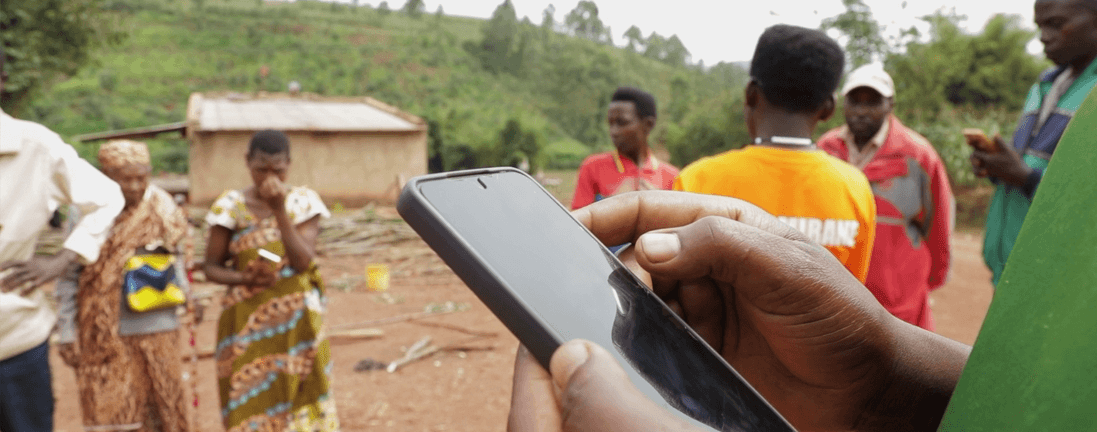
More about the Agile Data Project
Agile data approaches are transforming how development programs monitor, evaluate, and integrate data-driven knowledge. By allowing teams to collect and analyze data more frequently and efficiently, Agile methodologies offer real-time insight into key metrics, enabling faster strategy adaptation and more meaningful engagement with stakeholders. When combined with Agile data principles, which emphasize thoughtful, respectful, and resource-efficient data collection, the result is enhanced experiences for data contributors, better-quality information, and stronger decision-making.
COSA’s work exemplifies this synergy by integrating standardization, relevance, and rigor into Agile data frameworks. Through the Agile Data Approaches and Innovations for Monitoring (ADAIM) project we champion frequent, low-cost, and actionable data snapshots. These snapshots provide information about what does and does not work while the project is still in process. This allows for mid-course adjustments and real-time integration of data-driven insights, improving efficiency and impact.
[1] The 24% difference comes from comparing farmers who had data for all three data sources (app, CWS, in-person survey)


